
-Registry-Issuance-(8)-converted.png)
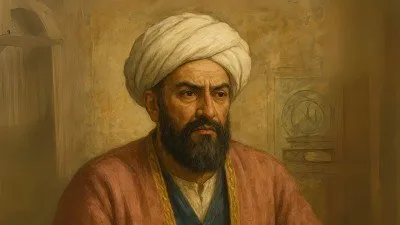
Ramadan is often understood as a month for increasing personal worship. Muslims strive to read the Qur’an more frequently, intensify their prayers, and observe fasting with greater discipline. In the history of Islam, however, Ramadan has also been a moment that highlights how spiritual values are closely connected to social concern. One story that is frequently told comes from the second caliph, Umar ibn al-Khattab.
In many narrations, Umar was known for his habit of walking around the city of Madinah at night. He wanted to see firsthand the condition of the community, without any distance between the ruler and the people. On one night during Ramadan, Umar came across a family whose situation was quite distressing. A mother was sitting near a small stove, while her children were crying from hunger.
Umar approached and asked, “Who is crying in there?” The woman briefly replied, “My children.” When Umar noticed a pot heating over the fire, he asked again, “What are you cooking?”
With a heavy tone, the mother explained that she was not actually cooking food. She was simply boiling water and stones to calm her children. “I am cooking these stones to comfort my children,” she said. She hoped that the children would believe that food was being prepared so they would wait until they eventually fell asleep.
In some narrations, it is also mentioned that the mother expressed her disappointment toward the leader of the time. She said, “Woe to the Commander of the Faithful, Umar ibn al-Khattab, who allows his people to go hungry.”
Hearing these words, Umar was deeply shaken. He did not say much and immediately returned to the bayt al-mal to take wheat and other food supplies. When one of his assistants offered to carry the sack for him, Umar refused. He chose to carry it himself and brought it back to the family’s home.
When he arrived, Umar helped prepare the food until the children were able to eat properly. He even waited until they were full and fell asleep peacefully. This incident has become one of the most frequently cited stories when discussing Umar’s leadership.
The story is often told as an example of a leader’s empathy. However, when examined more closely, it also illustrates how economic values in Islam operate in everyday life. Umar showed personal concern while also utilizing a public institution such as the bayt al-mal to ensure that the basic needs of society were met.
In much of modern economic literature, social welfare is often assumed to emerge through market mechanisms. As long as economic activity continues and growth increases, the distribution of welfare is expected to follow naturally. In reality, this does not always occur. In many places, economic growth continues to rise while some communities still struggle to meet their basic needs.
At this point, Islamic economics offers a somewhat different perspective. Economic activity is closely connected to moral responsibility. Instruments such as zakat, charity, and waqf function as acts of worship while also serving as mechanisms of distribution that maintain social balance. In this context, the bayt al-mal during Umar’s leadership can be understood as an institution that connects the wealth of society with the needs of its most vulnerable members.
Ramadan itself plays an important role in building this awareness. Fasting allows individuals to directly experience hunger and limitation. This simple experience often nurtures stronger empathy for others. It is therefore unsurprising that in Islamic tradition Ramadan is often accompanied by increased acts of giving, from daily charity to the payment of zakat.
The story of Umar shows that social concern exists across many layers of society. Individuals, leaders, institutions, and public policies all share a role in maintaining collective welfare. When moral values become part of the economic system, attention to the most vulnerable groups naturally becomes part of how that system operates.
Amid rising economic inequality in many countries, reflections such as this become increasingly important. Economic growth remains necessary, yet social welfare is also measured by how widely its benefits are experienced. What often becomes a concern is the extent to which the most vulnerable groups share in the gains of economic growth. Ramadan, through stories such as that of Umar ibn al-Khattab, reminds us that economics ultimately revolves around people. Empathy, social responsibility, and justice shape the way societies conduct economic activity.