
The development of the Islamic economy in Indonesia is entering a new phase that demands more strategic policy direction and institutional strengthening. The growth of the Islamic banking sector, the halal industry, waqf, and Islamic social finance has not yet fully transformed into a national economic force with significant driving force for justice and social welfare. In this context, the Indonesian Association of Islamic Economists (IAEI) plays a crucial role as a forum for thought and a center of academic reference in the development of the national Islamic economy.
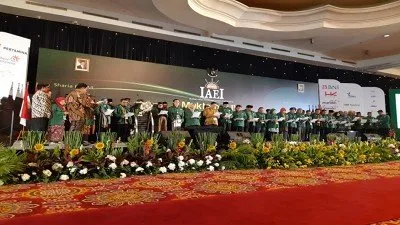
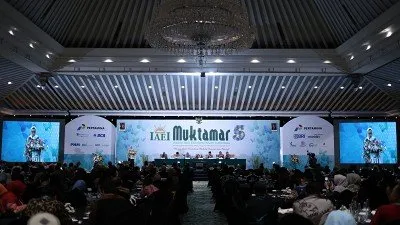
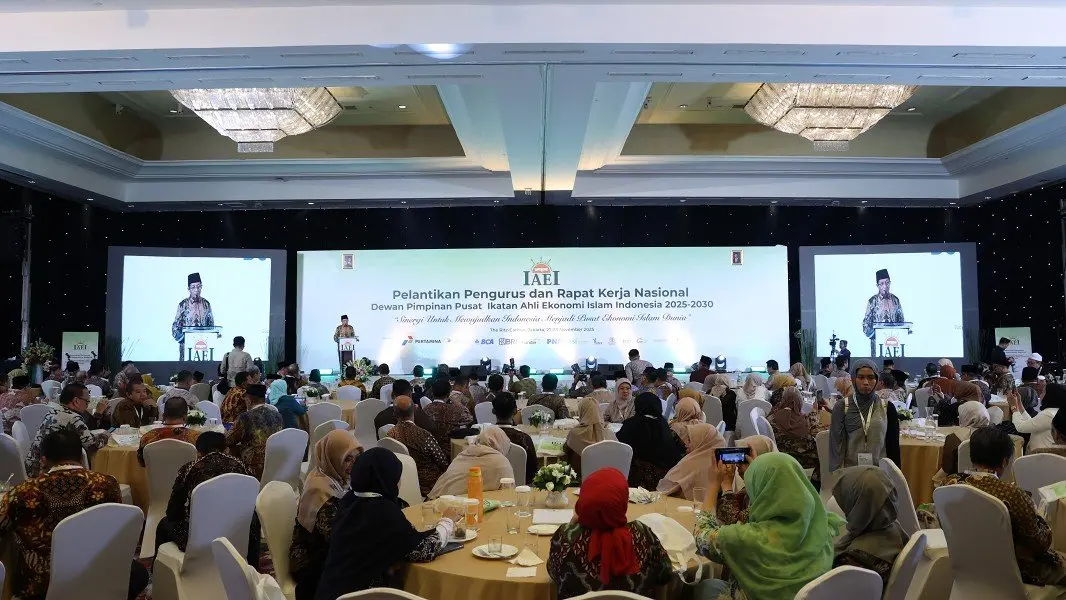
The IAEI Board Inauguration and National Working Meeting (Rakernas), held on November 27–28, 2025, will provide a space for collective reflection to reaffirm the organization's new direction and paradigm. This reflection is crucial so that IAEI does not remain merely ceremonial but is able to present concrete steps following its activities to oversee the transformation of Indonesia's Islamic economy.
An evaluation of the organization's progress reveals that internal and external challenges remain that need to be addressed. Fragmented interests, weak coordination between the central and regional governments, and a less-than-systematic working mechanism have subsided IAEI's role as a national think tank. Furthermore, the perceived closeness of the organization to certain political interests has the potential to erode the academic independence that should be IAEI's primary identity.
IAEI's new paradigm demands strengthening its scientific foundations, the organization's moral integrity, and the affirmation that all policy recommendations must be based on rigorous research and valid data. IAEI is also required to be able to address global challenges, from economic digitalization and the development of financial technology to sustainability issues, without losing the epistemological roots of Islamic economics, which are rooted in the values of the maqāṣid al-shari'ah (the principles of Islamic law).
Independence is a primary prerequisite for a scientific organization to maintain its intellectual credibility and moral authority. In the IAEI context, independence is not merely administrative but a fundamental principle that determines the direction of Islamic economic development in Indonesia. The organization must have the courage to be objective and critical, even if these views do not always align with external interests.
Intellectual independence also requires that IAEI be free from political, financial, or group pressure in producing knowledge and formulating policy recommendations. Therefore, strengthening an independent research ecosystem through permanent research centers, endowments, and sustainable funding schemes is a strategic agenda to maintain academic independence.
As a scientific organization, IAEI must maintain a healthy distance from practical politics. Strategic engagement with the government can only be built within an academic and public policy framework, not through political partisanship. IAEI's alignment must be directed solely at the values of justice, welfare, equity, and sustainability, which are at the core of Islamic economics.
In this regard, IAEI needs to strengthen its data-based research capacity and rigorous methodology so that every policy recommendation has strong academic legitimacy. Scientific publications, mapping national and regional strategic issues, and strengthening international networks must be integral parts of the organization's transformation.
IAEI's new paradigm also requires modern, inclusive, and meritocratic organizational governance. Leadership regeneration needs to be strengthened by opening broader participation opportunities for young academics and researchers, especially in facing the challenges of the digital economy and global transformation. A strong and sustainable organizational system will ensure that IAEI's strategic agenda is not dependent on a particular figure, but rather consistently implemented across leadership periods.
IAEI's new paradigm is a strategic step to make Islamic economics more relevant, solution-oriented, and influential in national policy. By strengthening its scientific commitment, maintaining political independence and independence, and focusing on the values of the maqāṣid al-syarī‘ah (the principles of Islamic law), IAEI is expected to solidify its role as a key driver of Indonesia's sharia economic transformation.
The courage to reform and maintain scientific integrity will determine IAEI's future position, not only as part of Indonesia's Islamic economic history, but as a guide towards a more just, inclusive, and sustainable economic system.