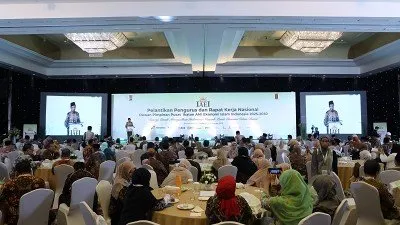

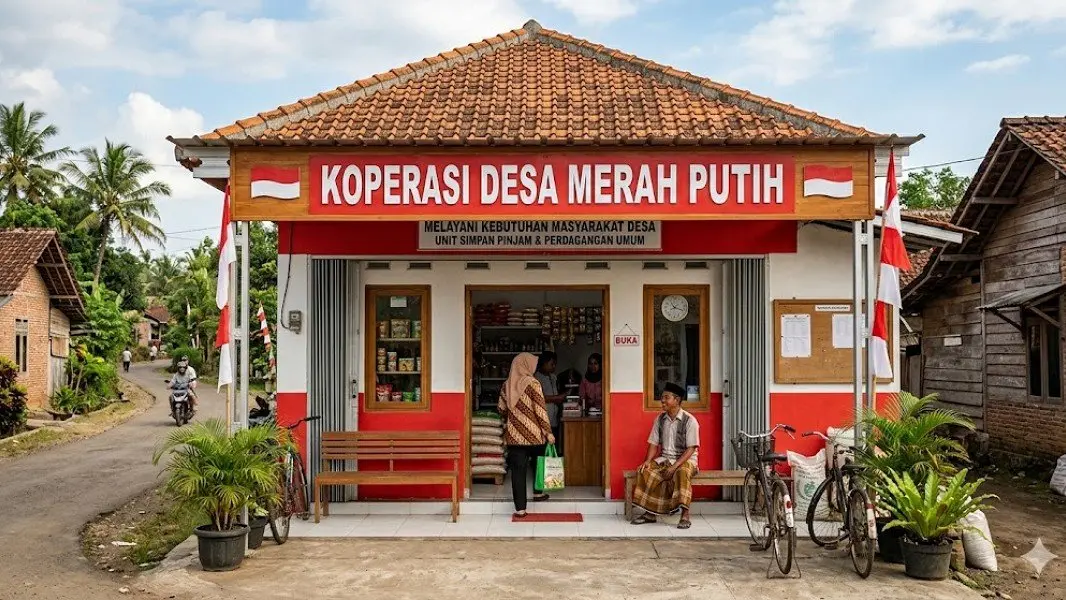
Kelurahan Merah Putih or Koperasi Desa is a major step taken by the Indonesian government through Presidential Instruction Number 9 of 2025 to strengthen the people's economy. However, there are significant challenges in aligning the government's vision with the fundamental nature of cooperatives on the ground. The establishment of tens of thousands of cooperatives at the village level is an ambitious target that requires careful attention to ensure its essence is not lost.
This grand plan encompasses claims of digitalization and easier access to financing for communities in remote areas. The government views cooperatives as a new spearhead of the national economy, capable of acting as a bulwark for the people amidst globalization. Through a spirit of mutual cooperation, these institutions are expected to improve the overall welfare of their members. Efforts to revive the national economic identity are a primary focus of the current government's development agenda.
However, despite this grandiose vision, there is an irony in the top-down approach to cooperative formation. Cooperatives are living entities that should grow organically based on the needs and awareness of grassroots communities. Quantitative targets imposed through the state budget are feared to undermine the idealism and trust among members. The success of these economic institutions depends heavily on voluntary participation and substantial community involvement.
The risk of the emergence of zombie cooperatives burdening the state budget through various subsidy and loan schemes that ultimately fail. The physical construction of cooperative buildings in less strategic locations, such as mountain slopes, also reflects ambitions that do not consider business feasibility studies. Neglecting human factors and a lack of education on cooperative values have the potential to create new avenues for corruption at the village level. Without solid governance, this program risks becoming a burden on the state budget in the long term.
From an Islamic economic perspective, the cooperative system is strongly relevant to the principle of economic justice. Cooperatives are seen as a concrete implementation of the concept of ta'awun, or mutual assistance in good deeds, in accordance with religious values. This aligns with the goal of sharia to protect the community's assets and lives from exploitative economic practices. The spirit of togetherness within cooperatives is considered capable of realizing a more equitable distribution of prosperity for all levels of society.
Transactions within cooperatives are guaranteed to be halal if their management consistently avoids the practice of usury or fixed interest. Profit-sharing mechanisms through mudharabah or musyarakah contracts provide a transparent solution for profit distribution based on members' real contributions. Islamic scholars believe that this modern syirkah-based economic cooperation significantly helps small communities escape the clutches of loan sharks. The principles of transparency and honesty in transactions are the primary foundation for cooperatives to gain blessings and public trust.
Therefore, it must be emphasized that this criticism is not intended to reject the cooperative movement, but rather to prevent it from degenerating into massive waste and mass disappointment. Integration of the Red and White nationalist spirit with Islamic spiritual values is necessary to strengthen the nation's economic independence. The government needs to shift its paradigm from merely chasing numbers to sustainable, quality empowerment. Independent oversight and independent audits are essential to safeguard institutional integrity from local political influence. With careful planning and based on an authentic spirit of mutual cooperation, cooperatives are expected to become a true pillar of people's economic sovereignty.