
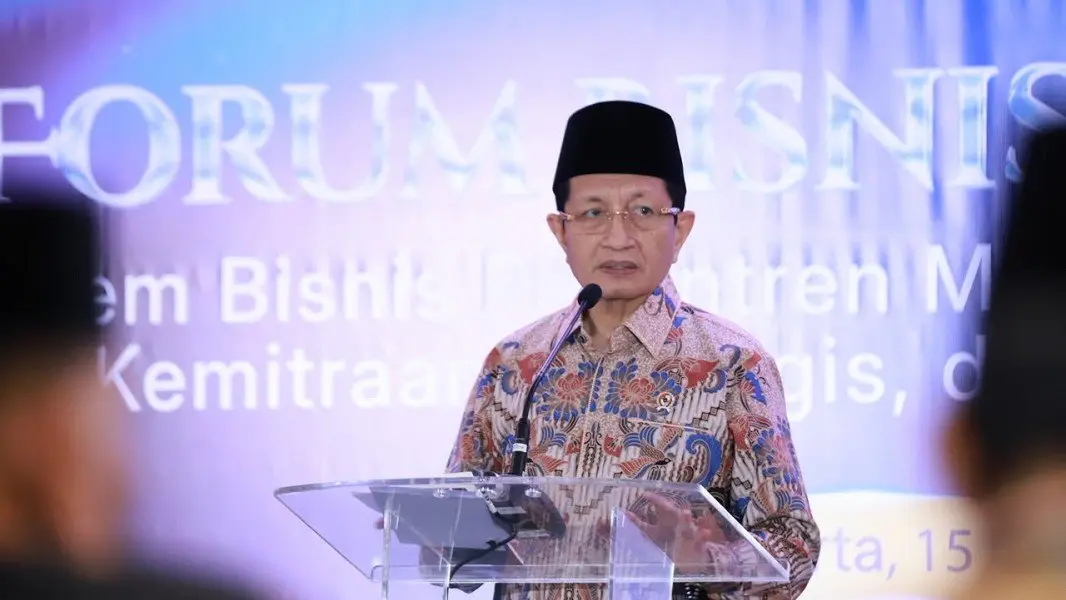
The Chairman of the Indonesian Association of Islamic Economists (IAEI), Prof. Nasaruddin Umar, is calling for the optimization of networks among mosques, Islamic boarding schools, madrasahs, and religious educational institutions to expand sharia economic literacy and strengthen the national halal product ecosystem. These religious institutions are considered to play a strategic role in building public awareness while promoting economic practices aligned with Islamic values.
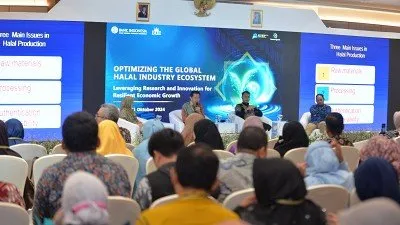
Prof. Nasaruddin, who also serves as Minister of Religious Affairs, shared this vision after attending the Indonesia Sharia Economic Festival (ISEF) 2026 on Thursday, October 15. According to him, strengthening the Islamic economy requires an approach that reaches the community down to the grassroots level, by leveraging the existing institutional and religious educational networks established across various regions.
Prof. Nasaruddin explained that the network of services and guidance is connected to approximately 800,000 mosques, more than one million imams, Islamic study groups (majelis taklim), and Religious Affairs Offices (KUA) throughout Indonesia. This extensive reach opens up opportunities to transform mosques and Islamic boarding schools not only into centers for worship and education but also into hubs for literacy, community empowerment, and the development of economic activities in accordance with Sharia principles.
Prof. Nasaruddin believes that the foundation of Sharia economic independence lies in the public’s awareness of applying the values of faith and Sharia in daily economic activities. Therefore, strengthening the halal ecosystem must be accompanied by continuous education, public understanding of halal products, and inter-institutional collaboration.
“In today’s era of globalization, cross-border communication, as well as transportation and economic mobility, are occurring at a rapid pace. Therefore, we need to strengthen institutions that are fully dedicated to overseeing this halal ecosystem,” said Prof. Nasaruddin.
In this context, the ISEF is considered strategic as a collaborative platform to accelerate public understanding of the Islamic economy and foster the habit of using halal products. These efforts must also be linked to strengthening business actors, developing the halal industry, and expanding market access so that increased public awareness is accompanied by growth in productive economic activity.
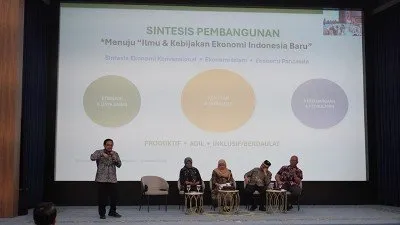
For IAEI, strengthening the network of religious institutions presents an opportunity to expand the contributions of academics and practitioners to the development of the Islamic economy. Universities, Islamic boarding schools (pesantren), mosques, zakat and waqf management institutions, regulators, and industry players can complement one another through research, public education, capacity building, and community economic empowerment.
Through targeted collaboration, IAEI promotes the development of the Islamic economy—one that is not only based on the growth of the financial industry but is also rooted in the community, underpinned by Islamic values, and provides tangible benefits for the well-being of the Muslim community.