
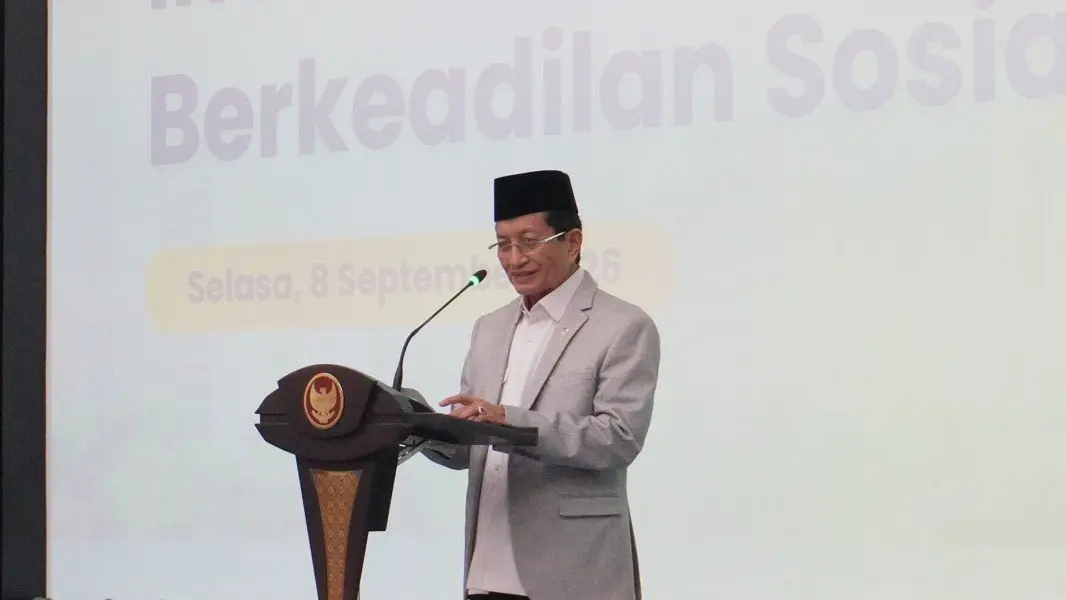
Prof. Nasaruddin Umar, Chairman of the Indonesian Association of Islamic Economists (IAEI), emphasized that the development of the sharia economy should not be limited to the growth of the sharia financial industry. The Islamic economy must be integrated into the national development system to address issues of equity, wealth distribution, and the improvement of public welfare.
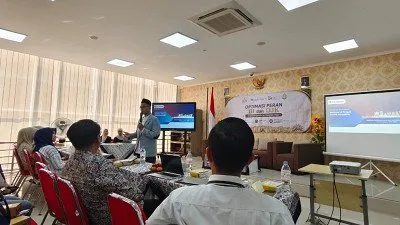
Nasaruddin conveyed this message at an IAEI symposium that brought together perspectives from Islamic economics, Pancasila economics, and conventional economics to discuss the direction of a more equitable economic development in Indonesia. The event took place on Tuesday, September 8, in the Graha Sawala Room at the Ali Wardhana Building, Ministry of Coordinating Economic Affairs of the Republic of Indonesia, Jakarta.
According to Prof. Nasaruddin, one area of strength that can be developed is the potential of community funds derived from zakat, infaq, sadaqah, and waqf. This potential is considered to be still very significant, yet it has not been fully mobilized to support empowerment and productive economic development.
“The economic potential of the Muslim community must be managed in a more integrated manner so that it does not remain merely potential, but truly becomes an economic force that benefits society,” emphasized Prof. Nasaruddin.
Prof. Nasaruddin, who also serves as Indonesia’s Minister of Religious Affairs, believes that optimizing community funds requires more integrated management—in terms of institutional structure, governance, and distribution. With this approach, Islamic social funds would not only function as aid instruments but could also become part of efforts to strengthen the community’s economic capacity.
During the symposium, the idea of establishing a Community Fund Management Agency (LPDU) emerged as one alternative for consolidating various Islamic social finance instruments.
The LPDU is expected to promote the management of community funds in a more targeted, equitable, transparent, and productive manner. This consolidation is also considered crucial for expanding the impact of community funds so they can reach more segments of society and support productive economic activities.
This idea aligns with the IAEI’s focus on strengthening waqf and community funds as one of the pillars of national economic development. Optimizing this potential requires strengthening governance, transparency, accountability, and oversight systems so that community funds can be managed in good faith and provide long-term benefits.
The Chairman emphasized that the future development of the Islamic economy must take a broader approach—not only by building the Islamic financial industry but also by strengthening connections with the real sector and empowering communities.
Thus, the Islamic economy is expected to make a greater contribution to the national development agenda, particularly in strengthening economic equity, improving public welfare, and realizing a just economic system.