
The Indonesian Association of Islamic Economists (IAEI) is promoting the strengthening of the sharia economic ecosystem in West Nusa Tenggara (NTB) through the development of the halal industry, the expansion of productive financing, the digitalization of SMEs, and the optimization of zakat and waqf. Synergy among the government, financial institutions, universities, Islamic boarding schools, and the business community is key to ensuring that this potential yields tangible benefits for the community.
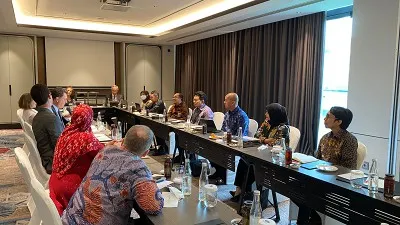
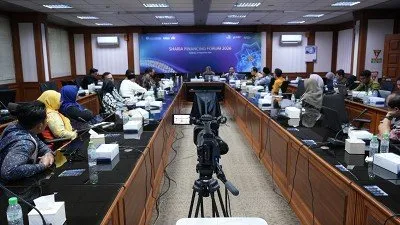
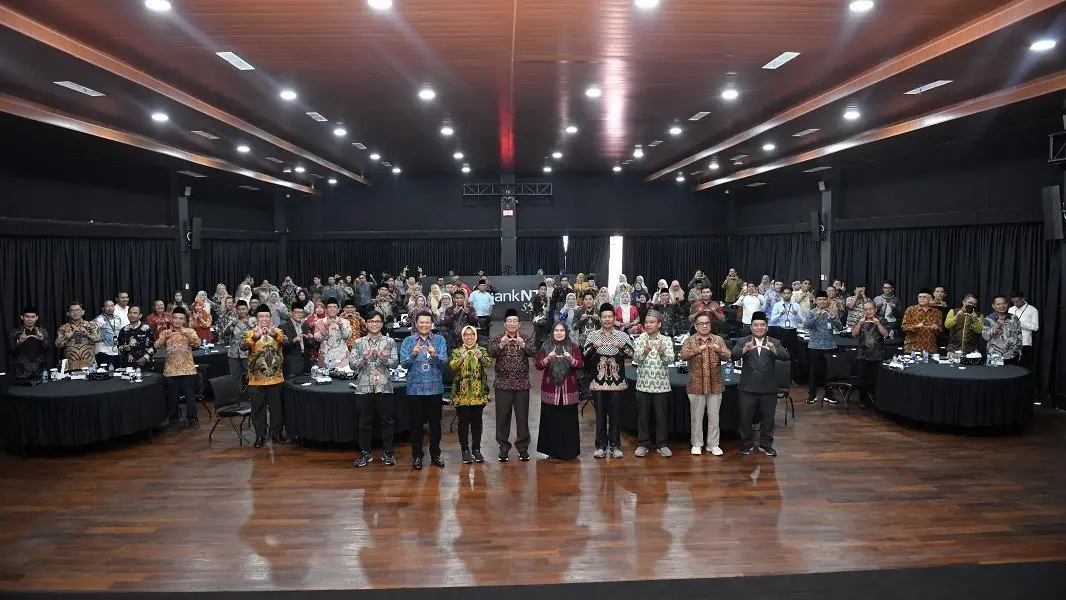
These points were highlighted during the National Seminar on Strengthening the Sharia Economy and Finance, held in conjunction with the inauguration of the NTB IAEI Regional Executive Board for the 2026–2031 term at the Bank NTB Syariah Headquarters in Mataram on Wednesday, October 21.
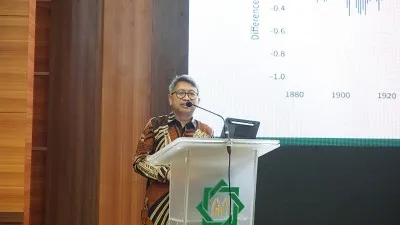
The Chair of the Islamic Public Finance Development Division, Prof. Waryono Abdul Ghafur, highlighted NTB’s economic potential, which is supported by MSMEs, agriculture, livestock, fisheries, trade, and halal tourism.
“NTB’s economic potential, which is supported by the SME, agriculture, livestock, fisheries, trade, and halal tourism sectors, needs to be strengthened through integration with sharia financial services and Islamic social finance instruments. In this way, the development of these sectors can provide added value and broader benefits for the community,” said Prof. Waryono.
Seminar materials noted that the number of SMEs in NTB is projected to reach approximately 324,000 units by 2025. However, business development still requires support in improving product quality, halal certification, processing, and market access. As of October 8, 2026, the utilization rate of the Free Halal Certification (SEHATI) quota in NTB stood at 54.32 percent.
On the financing front, Bank NTB Syariah presented financing schemes for working capital, investment, micro and ultra-micro loans, as well as Sharia-compliant People’s Business Credit (KUR). The bank also introduced the Cash Waqf Linked Deposit (CWLD), an instrument that links Sharia-compliant deposits with the use of waqf proceeds to support education and economic empowerment.
Meanwhile, the Bank Indonesia Representative Office for NTB Province emphasized the importance of strengthening the halal value chain—from raw material supply to marketing. Digitalization also presents an opportunity to expand transactions and market access. Bank Indonesia data as of August 2026 recorded 502,757 QRIS merchants and 604,147 QRIS users in NTB.
In the field of Islamic social finance, the distribution of zakat, infaq, and sadaqah by the NTB Provincial BAZNAS reached Rp18.36 billion as of September 30, 2026, benefiting 28,940 individuals. Strengthening the legal status of waqf land assets is also a priority to ensure their optimal utilization for the public good.
The Chair of the NTB IAEI Provincial Executive Board for the 2026–2031 term, Prof. Baiq El Badriati, emphasized the importance of ensuring that cross-sector collaboration results in measurable programs.
“Collaboration must produce tangible programs. The development of sharia finance, the halal industry, the empowerment of MSMEs, and the improvement of financial literacy need to be carried out in an integrated manner, have measurable targets, and provide direct benefits to the community,” she said.
IAEI NTB also emphasized the role of universities and professional organizations in bridging the gap between research and regional development needs. Through policy recommendations, business mentoring, literacy enhancement, and cross-sector partnerships, the development of the Islamic economy is expected to boost the competitiveness of local products and expand economic empowerment among the community.