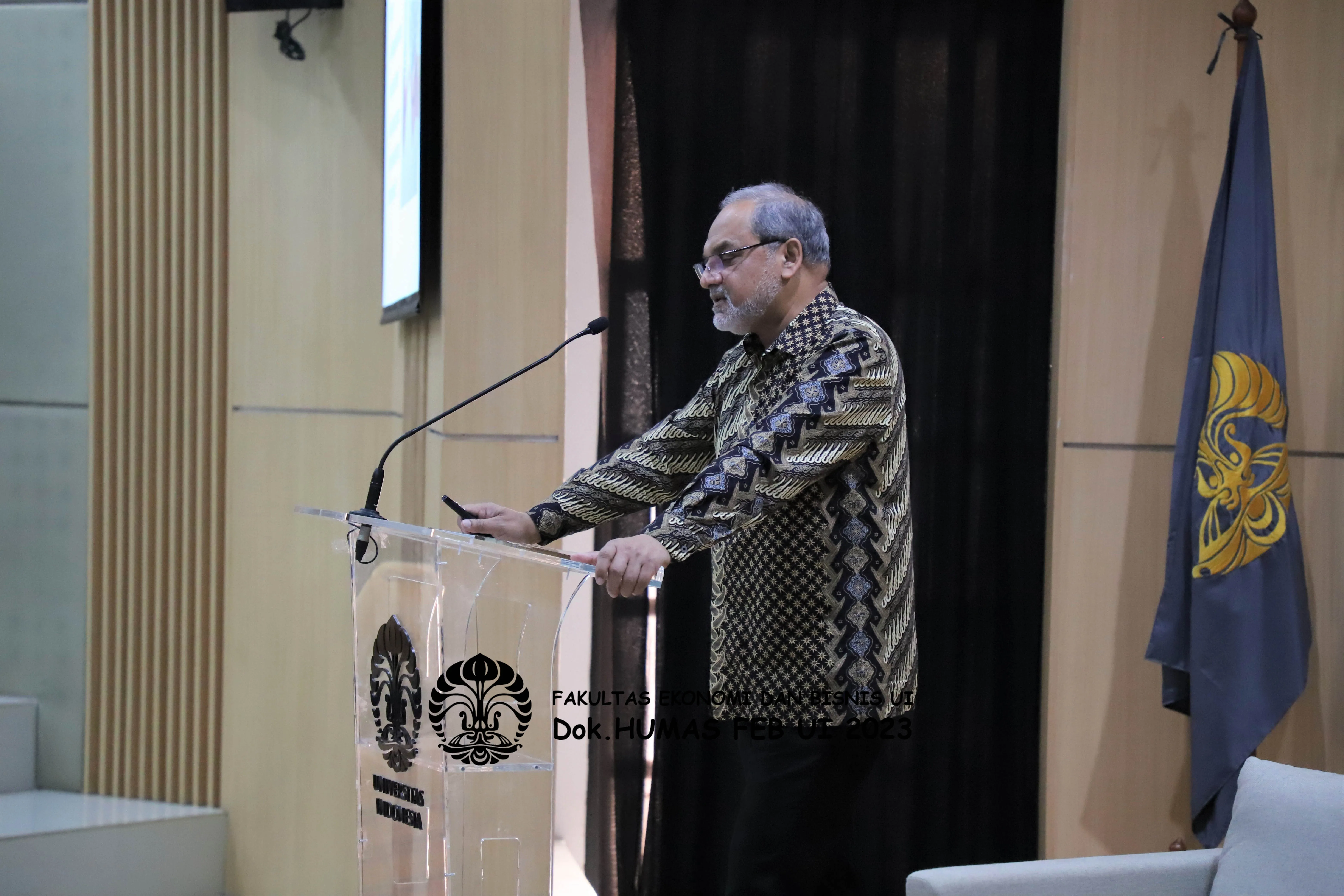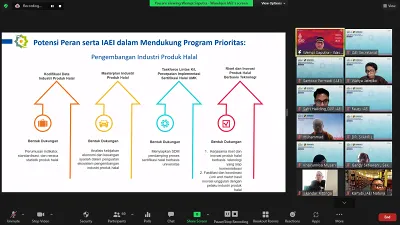


Prof. Irfan Syauqi Beik, Vice Chair of the Indonesian Association of Islamic Economists (IAEI), emphasized that the quality of human capital is a key factor for Indonesia to strengthen its position as one of the global centers of the sharia economy. According to him, a large Muslim population, asset growth, and regulatory support are not enough without competent human resources capable of meeting the industry’s needs. He made these remarks during the webinar “Ready to Compete: Indonesia’s Sharia Economy Workforce Amid Global Competition,” held online via Zoom on Tuesday, September 1.
Prof. Irfan highlighted data on “learning-adjusted years of schooling,” which reveals a gap between the duration of education and the quality of learning. The average length of education in Indonesia is 12.4 years, but when adjusted for the quality of learning, it is equivalent to about 7.8 years. “This is one of the challenges that ultimately leads to a decline in the productivity of our human resources. This is a tremendous challenge,” emphasized Prof. Irfan.
According to Prof. Irfan, strengthening human resources in the Islamic economy has become part of the national policy agenda through the 2023–2027 RP3SI, the Indonesian Islamic Economy Master Plan, the RPJMN, and the RPJPN. As of May 2026, 23 provinces and 182 regencies/cities have adopted Islamic economy indicators in their regional development planning. However, its implementation requires competent human resources.
“The success of this policy heavily depends on human resource capacity. Therefore, we need to strengthen education and competency certification, foster closer collaboration between industry and higher education institutions, and promote research and innovation relevant to policy and industry needs,” said Prof. Irfan.
Indonesia’s experience in developing human resources for the Islamic economy is also beginning to attract global attention. Prof. Irfan cited his mission in Sokoto, Nigeria, to provide capacity-building training as an example, demonstrating that Indonesia’s experience has the potential to contribute to strengthening the Islamic economic ecosystem, both domestically and globally.