

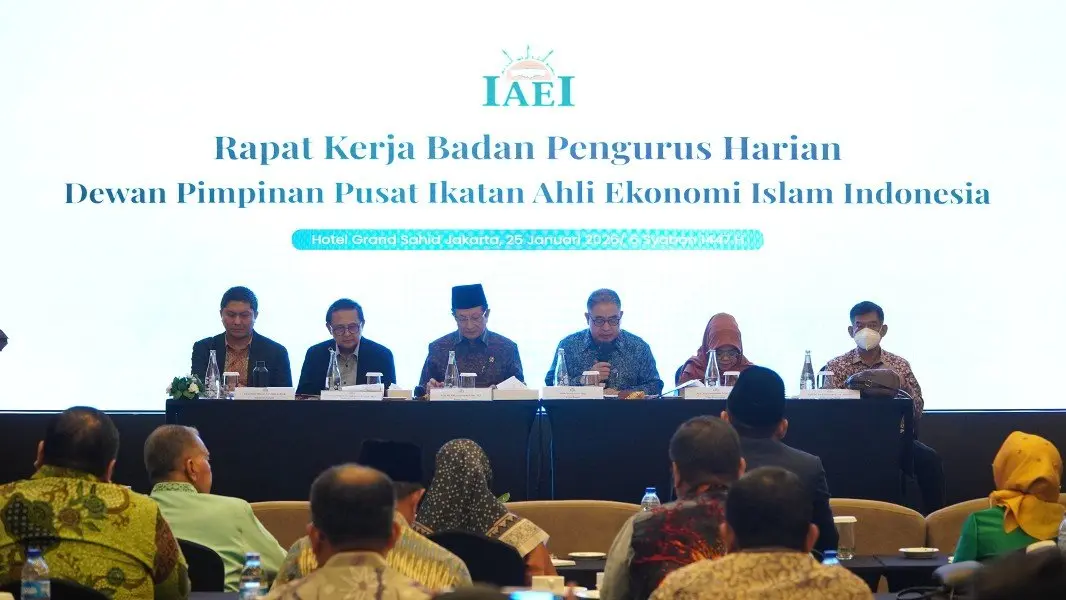
The Central Executive Board (DPP) of the Indonesian Association of Islamic Economists (IAEI) held a Working Meeting of the Executive Board (BPH) on Sunday, January 25, 2026, at the Sahid Hotel, Jakarta. This agenda was a crucial moment to harmonize policies and work programs, as well as to strengthen the strategic role of IAEI in advancing inclusive and sustainable national Islamic economic development.
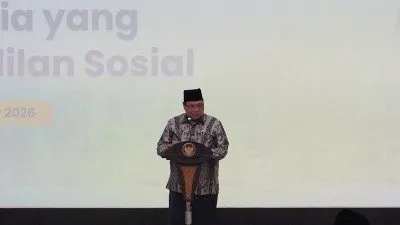
IAEI Chairman Prof. Dr. K.H. Nasaruddin Umar, in his keynote speech, emphasized that the IAEI National Working Meeting is a strategic forum for converting intellectual ideas on Islamic economics into concrete policies that have a positive impact on society and the nation.
Prof. Nasaruddin highlighted Indonesia's strong global reputation, supported by solid national communication, cultural wealth, strong national leadership, and policies that are able to maintain economic growth stability.
“With Indonesia's economic growth still above the ASEAN average, this position must be optimized as strategic capital,” said the Chairman during his keynote speech at the IAEI National Working Meeting in Jakarta on Sunday (1/25/2026).
The Chairman, who is also the Minister of Religious Affairs of the Republic of Indonesia, emphasized that it is time for Islamic economic principles, such as mudharabah and musyarakah, to be more widely adopted as the foundation of a fair real economy.
“As long as the fundamental economy remains dominated by monetary liberalism, the impact on welfare will be difficult to feel in real terms. The sharia economy is here as a corrective instrument and solution,” said Prof. Nasaruddin.
IAEI, said Prof. Nasaruddin, will be encouraged to transform from a mere professional organization into a strategic organization. This will be done by utilizing the great potential of Indonesian Muslims, especially the rise of santri (Islamic boarding school students) who are now actively playing roles as diplomats, public leaders, and policy makers.
“IAEI must become a big house for Islamic economic intellectuals, both at home and abroad, a meeting place for practitioners, regulators, and scholars without ideological barriers,” said the Chairman.
This working meeting also discussed several important issues. Among them are the strengthening of the moderate middle class, the use of quantitative data as a basis for policy, the potential of the sharia economy as a solution in facing theoretical shocks and multiple global shocks, including geopolitical dynamics and climate change.
Next is the impact of disruption from digital and blockchain-based financial technology and the development of strategic ideas in the fields of digitalization, green finance, and blended finance based on sharia maqashid.
The working meeting also highlighted the discourse on the development of a representative center for Islamic activities as a symbol of the greatness of Indonesian Muslims, as well as a center for intellectual and policy consolidation. This step is considered strategic to strengthen Indonesia's position as the country with the largest Muslim population in the world.
“President Prabowo supports the establishment of a center for Islamic activities, represented by the establishment of the Umat Fund Empowerment Institution building,” said Prof. Nasaruddin.
Prof. Nasaruddin then explained the national economic resilience as seen from Indonesia's economic growth data for the third quarter of 2025, which reached 5.04 percent. This data serves as an important foundation for the national economy amid global uncertainty.
Through this working meeting, the DPP IAEI reaffirmed its commitment as a strategic partner of the government, an agent of change, and a center for formulating sharia economic ideas that are relevant to national needs and global challenges, in order to achieve equitable and sustainable economic growth.
Media Contact:
Dr. Sutan Emir Hidayat, Secretary General of IAEI
-extra_small.jpg)