
-converted.jpg)
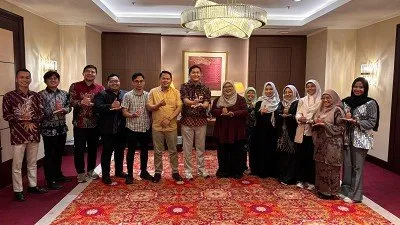
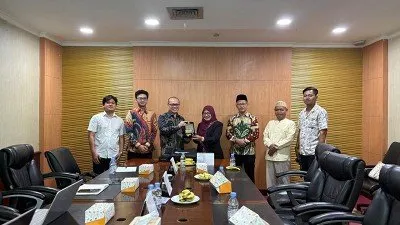
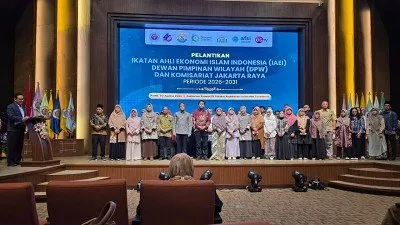
The Chairperson of the Indonesian Association of Islamic Economists (IAEI) called for strengthening sharia financial literacy and inclusion in East Java so that the public’s understanding of the sharia economy can translate into productive economic behavior and activities. This initiative is one of the strategic priorities in a series of events—including the Inauguration of the Regional Chapter, Public Hearings, a National Seminar, and the IAEI East Java Regional Working Meeting—held at Surabaya State University on Thursday, August 27.
Prof. Nasaruddin Umar, who serves as both the IAEI Chairman and Minister of Religious Affairs, highlighted the gap between the levels of Islamic finance literacy and inclusion in East Java. He noted that this situation offers an important lesson: the Islamic financial literacy agenda cannot stop at raising awareness.
According to him, the IAEI has a strategic role in bringing together various stakeholders within the Islamic economic ecosystem—from academics and practitioners to Islamic boarding schools, industry, and the government.
“The IAEI has immense potential to serve as a bridge. We bring together knowledge and experience, academics and practitioners, Islamic boarding schools and industry, and research and policy,” he said.
Furthermore, the chairman emphasized that strengthening the Islamic economic ecosystem requires knowledge capable of addressing real-world community issues. IAEI must not merely be an organization that advocates for the importance of the Islamic economy; it must also take an active role in driving the ecosystem through knowledge and collaboration.
“IAEI must not remain an organization that merely talks about the Islamic economy. IAEI must become an organization that drives the Islamic economy through knowledge and collaboration,” he concluded.
Through a series of activities in East Java, IAEI reaffirmed its commitment to expanding the contribution of the Islamic economy from the realm of knowledge toward implementation. It is hoped that the strengthening of financial literacy will go hand in hand with increased financial inclusion, while universities and Islamic boarding schools can serve as centers for human resource development and innovation in the Islamic economy.