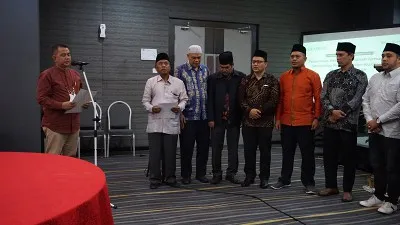

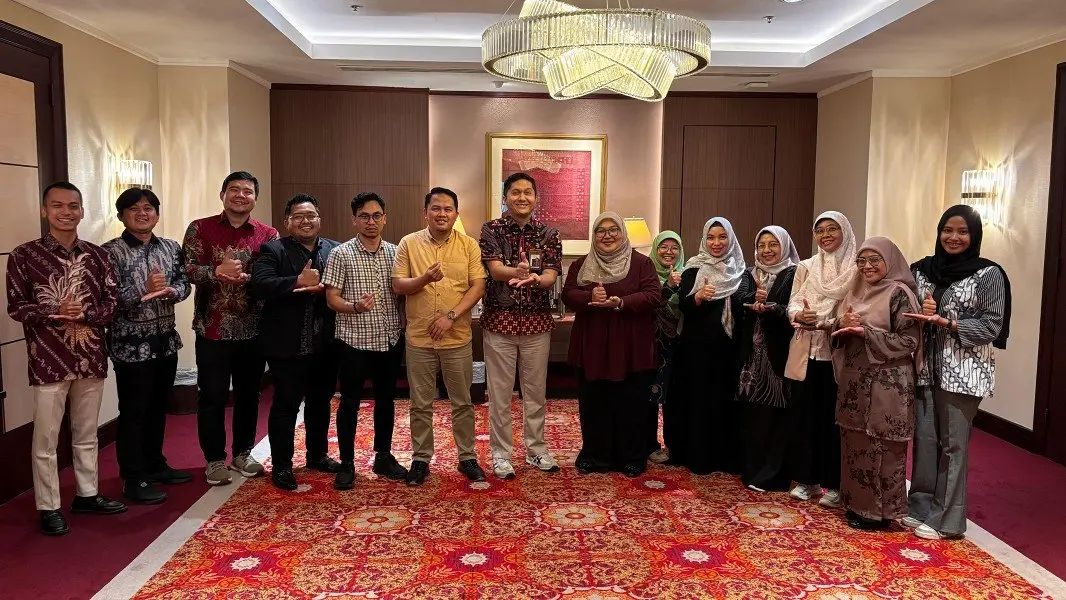
In an effort to advance Islamic economics and finance in the ASEAN region, INCEIF University, as one of the leading institutions in global Islamic Finance, held a Focus Group Discussion (FGD) entitled “Integrating ASEAN Islamic Finance through Academic Collaboration and Knowledge Transformation (IMPACT)”. This event was made possible thanks to the strategic collaboration between INCEIF, the Indonesian Association of Islamic Economists (IAEI), and the National Committee for Sharia Economics and Finance (KNEKS).
The forum discussion involved various associations of Sharia economics study programs and was attended by representatives from several universities that offer related study programs. The main objective of this FGD was to identify challenges and explore opportunities for collaboration in the development of Islamic economics and finance education in the ASEAN region.
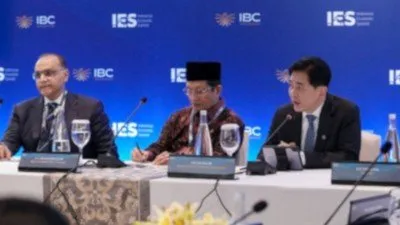
The spirit of synergy between Indonesia and Malaysia was a key point in the discussion. Dr. Sutan Emir Hidayat, Secretary General of IAEI who is also the Director of Sharia Infrastructure and Ecosystem at KNEKS, emphasized that, “Both countries prioritize collaboration and synergy over competition.”
Following up on this spirit of cooperation, the urgency of establishing an operational framework has also emerged. Dr. Nurhuda Othman, Director (Interim) of i-RISE, ISRA Institute, INCEIF University, highlighted, “We see the need to focus on developing a specific operational framework as an important step forward in this collaboration.”
The FGD emphasized challenges in the education sector. Sharia Economics (Eksyar) departments in various public universities are still considered to use conventional mindsets. To overcome this, the curriculum must be modernized by integrating aspects of entrepreneurship (in line with the role of MSMEs in Indonesia) and technology, as well as incorporating modern topics such as Islamic Social Finance and the issue of asset/sukuk tokenization.
Additionally, it was agreed that to effectively reach the younger generation, particularly Generation Z, which is now an important segment, the education sector must take strategic steps. This means that the sector needs to specifically address the unique challenges that accompany this generation. Generation Z is known to have different characteristics in terms of how they learn, process information, and interact with the world, which is strongly influenced by digital technology, social media, and the adoption of AI.
Therefore, adjustments to the curriculum and teaching methods are needed to make them more relevant and engaging. Challenges that need to be addressed include shorter attention spans, the need for more interactive and visual-based learning, and a preference for concise and accessible learning.
The FGD also highlighted the need to bridge the gap between institutions that are highly oriented towards conventional economics and those that are more oriented towards Sharia, or differences in views within the context of Sharia itself, which necessitates compliance with applicable laws and regulations or, more specifically, the National Sharia Council (DSN) in the Indonesian context.
The main point that emerged from this FGD was the importance of harmonizing Islamic economics curricula in Indonesia and Malaysia in particular, and generally in countries in the ASEAN region. This effort aims to overcome the problem of ‘link and match’ and fill strategic roles in industry, government, and universities, while also improving the competence of lecturers and equipping students with stronger and more accurate analytical and problem-solving skills.