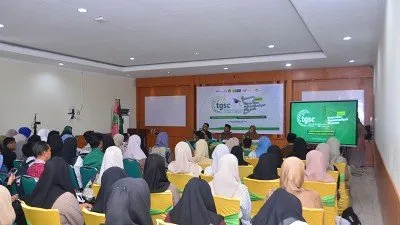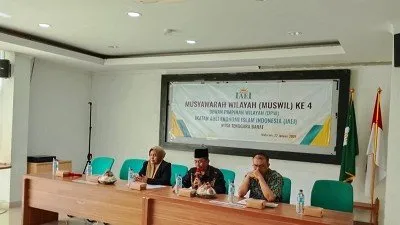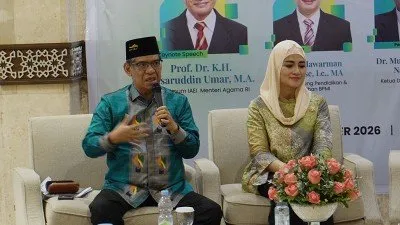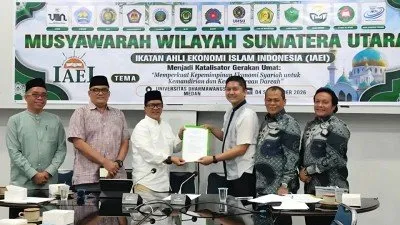

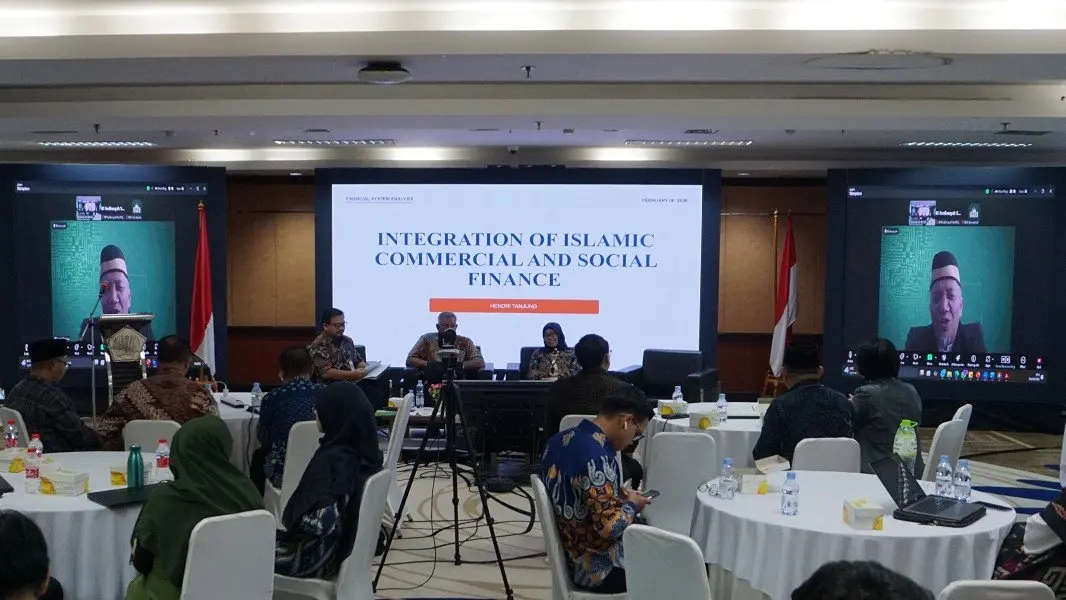
Policy makers, academics, and Islamic finance practitioners emphasize that the integration of Islamic social finance (ZISWAF) with commercial finance has strong relevance in supporting the achievement of global Sustainable Development Goals (SDGs). This was the topic of discussion at a seminar organized by the Indonesian Association of Islamic Economists (IAEI) together with KNKS and ILUNI FH UI, which highlighted the urgency of institutional synergy to strengthen social impact.
The world is currently moving towards a major deadline in 2030, the year in which 17 Sustainable Development Goals (SDGs) are targeted to be achieved. This global agenda is a collective commitment to eradicate poverty, reduce inequality, expand access to education and health, and maintain environmental sustainability. However, the reality shows that the road to these goals is not easy. The COVID-19 pandemic and global recession have pushed more than 131 million people back into extreme poverty and made the global poverty reduction target even more difficult to achieve. In fact, the total funding required to meet all 17 goals and targets is estimated at US$4.2 trillion, while the funding gap remains at US$1.7 trillion. In this situation, various alternative approaches to development become relevant to explore, including Islamic economics.
Conceptually, Islamic economics has a foundation that is very close to the spirit of the SDGs. In Islam, the main objective of Islamic economics is formulated in the concept of maqashid syariah, which is to realize maslahat or benefit for humanity. This maslahat is realized through the protection of five fundamental aspects of life, namely protecting religion, life, intellect, lineage, and property. Upon closer inspection, the goals of the SDGs, such as poverty eradication, improving the quality of education, adequate health, reducing inequality, and developing fair institutions, have strong intersections with these five principles. This means that long before the SDGs were agreed upon globally, the normative framework in Islam had already placed human welfare as its main orientation. This compatibility becomes even more important when we consider that the global Muslim population is predicted to reach 2.2 billion by 2030, which means that the dimensions of maqashid sharia are also relevant demographically.
What distinguishes Islamic economics from conventional systems is not only its ethical values, but also its balancing mechanisms. Islamic economics does not only rely on commercial aspects that pursue growth, but also inherently integrates social dimensions. This momentum is clearly visible on a global scale, where sharia financial assets reached approximately US$5.9 trillion in 2024, while global Muslim consumer spending reached US$2.43 trillion in 2023 and is projected to increase to US$3.36 trillion in 2028. These figures show that the Islamic economy has become a growing economic force with the capacity to support the sustainable development agenda.
On the other hand, the social sector in the Islamic economy plays an equally important role. Sharia social funds show a significant upward trend, with ZIS-DSKL funds reaching IDR 40.51 trillion and cash waqf reaching IDR 3.02 trillion in 2024. These instruments directly address the agenda of poverty alleviation, reduction of inequality, and economic empowerment of mustahik through productive schemes. When zakat, infaq, and waqf are managed in an integrated manner with national programs such as extreme poverty alleviation, Free Nutritious Meals (MBG), village cooperatives, and strengthening MSMEs, their contribution to the SDGs becomes more tangible and measurable.
However, this opportunity still faces serious challenges. Although Islamic financial literacy has increased to around 43.42% in 2025, this figure is still far from conventional financial literacy, and the level of Islamic financial inclusion is only around 13.41%, indicating that the public's understanding of Islamic products has not yet fully transformed into the use of Islamic products and services. This low conversion rate is partly due to the public's general understanding of Islamic terms without knowing the products in an applicable manner, education that is not yet contextual, the perception that Islamic services are more expensive or complex, and suboptimal promotion and communication from Islamic financial institutions.
Despite facing various challenges, the Islamic economy continues to have a tangible impact on the achievement of the SDGs because it is able to integrate growth and equity. Its commercial sector promotes productive financing and job creation, while social instruments such as zakat and waqf strengthen the social safety net and reduce inequality. This synergy makes the Islamic economy aligned with the goals of inclusive and sustainable development. Therefore, the development of the Islamic economy and finance needs to be continuously strengthened so that its level of inclusiveness increases and its contribution to the SDGs becomes more optimal.