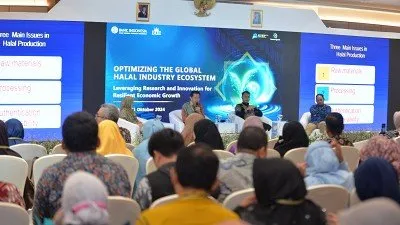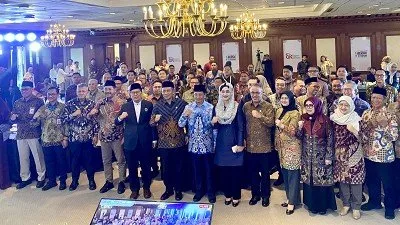

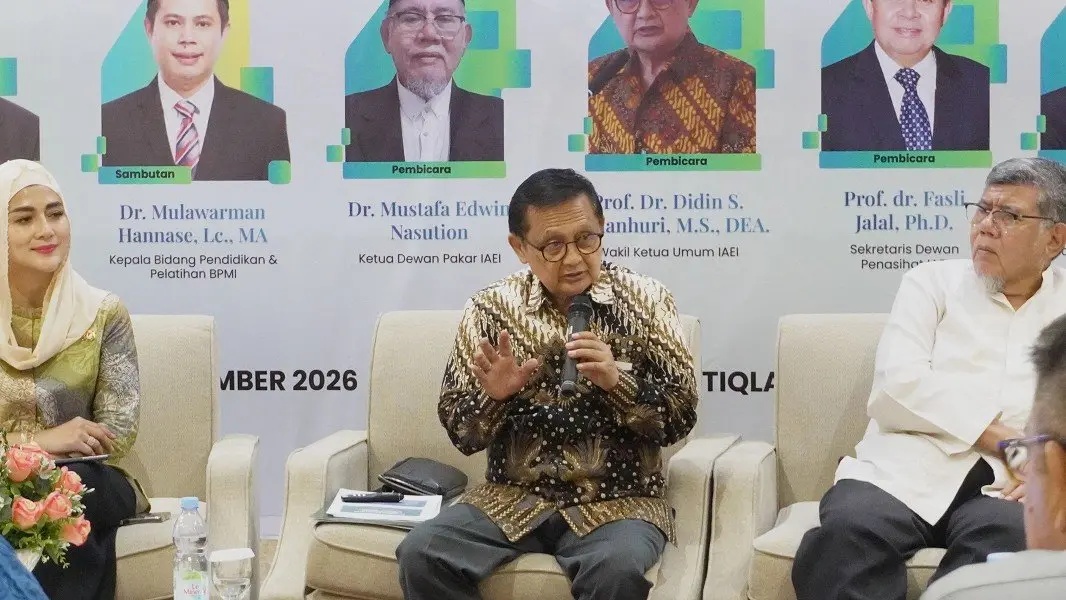
Deputy Chairman of the Indonesian Association of Islamic Economists (IAEI), Prof. Didin S. Damanhuri, emphasized that Islamic economics needs to be developed beyond the sharia finance sector by strengthening families, micro and small enterprises, communities, equity, and social justice as part of an interconnected economic ecosystem. He shared this perspective during the IAEI National Symposium and Expert Council Discussion Forum held in the VVIP Hall of the Istiqlal Mosque in Jakarta on Tuesday (September 29).
“We have been focusing too much on Islamic economics in the context of the financial sector. In reality, Islamic economics is much broader. It encompasses families, MSMEs, community empowerment, income equality, and social justice,” said Prof. Didin.
According to him, the family must be positioned as one of the foundations of economic development because it serves as the setting for education, character building, and the development of the next generation’s productivity. The weakening of family and community structures can have long-term consequences for the quality of human resources.
In the financing sector, Prof. Didin highlighted the role of Islamic banking in driving economic mobility among the public, particularly for MSMEs. He noted that Indonesia’s Islamic banking assets stand at around Rp3,000 trillion, while, based on his presentation, the share allocated to MSME empowerment remains at approximately 31 percent. He advocated for increasing MSME financing to the range of 60–80 percent while maintaining a focus on financing quality and the health of the industry.
In addition to Islamic banking, Baitul Maal wat Tamwil (BMT) institutions hold a strategic position because they are closer to micro-business owners. He noted that there are approximately 20,000 BMT units and linked this to the structure of Indonesia’s business sector, which, according to his presentation, is dominated by micro-enterprises.
“If 99.98 percent of our business structure consists of microenterprises, then it’s impossible to serve them all with the same approach as large corporations. BMTs hold a strategic position in this regard,” he emphasized.
From the perspective of national economic resilience, Prof. Didin also stressed the importance of ensuring that growth goes hand in hand with equity. He urged that the Islamic economy not only be directed toward expanding the Islamic finance industry but also toward building an ecosystem that strengthens families as the foundation of human capital, MSMEs as the basis of economic activity, BMTs and Islamic banking as financing instruments, and equity policies as the link to ensure that growth yields broader benefits.
This perspective positions economic empowerment and mobility as crucial components of the Islamic economic resilience agenda. By strengthening the connections between families, MSMEs, communities, Islamic financial institutions, and the real sector, the Islamic economy can be developed as an ecosystem that not only pursues growth but also expands economic opportunities and enhances societal well-being.