
Amidst the hustle and bustle of life abroad, financial issues often pose a silent challenge for Indonesian Migrant Worker (PMI) households. Far from home, with income earned through hard work abroad, many PMI families still face limited financial literacy, the risk of illegal loans, and vulnerable financial decisions. Based on this reality, the PIALANG (Smart Money Management) Social Movement exists as a collective effort to strengthen the economic resilience of PMI households based on Sharia values.
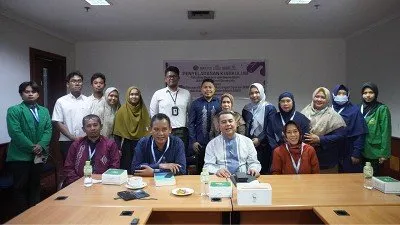
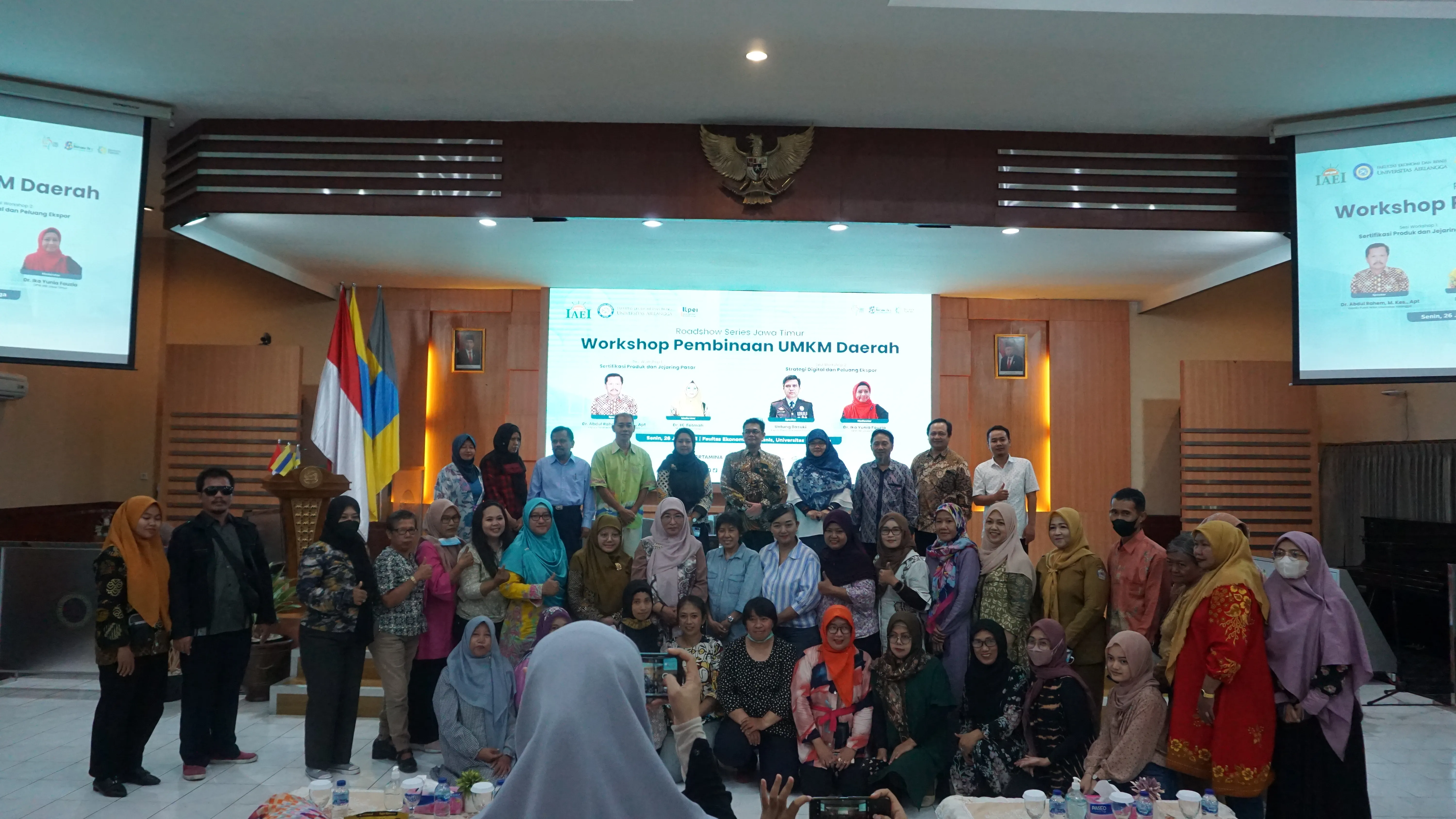
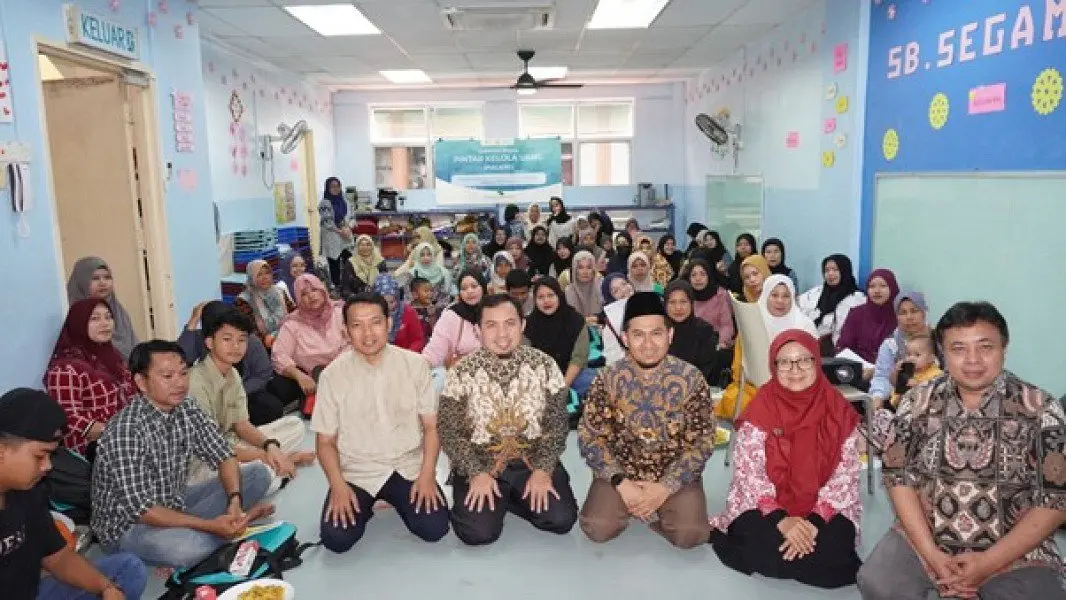
The event, titled "PIALANG Social Movement: Sharia Financial Literacy for Indonesian Migrant Worker (PMI) Households in Malaysia," was held on Sunday, December 14, 2025, at the Segambut Guidance Center (SB), Kuala Lumpur, Malaysia. This program is a collaboration between the Center for Sharia Economics and Business (PEBS) FEB UI and the Regional Leadership Council of the Association of Islamic Economists (DPW IAEI) Malaysia, as part of the University of Indonesia's International Community Service program.
In his remarks, Nur Kholis, M.S.E., Deputy Head of PEBS FEB UI, emphasized that Indonesian migrant workers play a strategic role not only as the backbone of their families but also as important contributors to the national economy. Malaysia is the largest country of placement for Indonesian migrant workers, with over 1.4 million people. However, this substantial contribution has not been fully matched by readiness for financial literacy and inclusion, particularly in line with Sharia principles.
"Low Sharia financial literacy and the prevalence of exploitative financial practices such as illegal online loans are a wake-up call for us all. The PIALANG program is here to bridge this gap, with a practical, ethical, and down-to-earth approach," said Nur Kholis to the participants, the majority of whom were female Indonesian migrant workers.
Echoing this sentiment, Nashr Akbar, M.Ec., Deputy Chair II of the Regional Executive Board of the Indonesian Islamic Association (IAEI) Malaysia for the 2024–2028 period, emphasized the importance of the role of diaspora communities and networks in strengthening Islamic economic literacy abroad. He believes that collaboration between academics and professional organizations like the IAEI is key to ensuring that financial education is not limited to a single activity but is sustainable and has a broad impact.
The main session was delivered by Rahmatina A. Kasri, Ph.D., Head of the Center for Islamic Economics and Business (PEBS) at the Faculty of Economics and Business, University of Indonesia (FEB UI), along with Thuba Jazil, M.Sc. (Fin), Deputy Chair III of the Regional Executive Board of the Indonesian Islamic Association (IAEI) Malaysia for the 2024–2028 period. The presentation began with a reinforcement of the Islamic concept of wealth management, emphasizing that wealth is essentially a trust from Allah SWT that must be managed responsibly, fairly, and with a focus on the well-being of the family.
Building on this foundation, participants were encouraged to understand the practical application of Islamic financial planning, from income management and household budgeting, the importance of emergency funds as a buffer during crises, wise debt management, and an introduction to Sharia-compliant financial instruments and investments. Particular emphasis was also placed on awareness of illegal online loans and fraudulent investments, which often target migrant communities with the promise of instant profits.
More than simply a transfer of knowledge, the BIALANG Social Movement was designed as a space for dialogue and shared reflection. Participants were encouraged to recognize that financial planning is not simply a matter of numbers, but rather a long-term endeavor to ensure the blessings of one's fortune, the peace of mind of one's family, and the future of one's children. Islamic values such as justice (al-'adl), prudence, cooperation (ta'āwun), and responsibility were the main foundations of each discussion.
The impact of this activity was palpable for the participants. Sri Novita Sari, who has worked and lived in Malaysia for over 15 years, said she gained a new perspective on managing family finances. "This is great because it broadens our horizons. What was taught earlier is very applicable in everyday life, not only for me, but also for my children," she said after attending the entire training series.
Through this activity, PEBS FEB UI and DPW IAEI Malaysia hope that PMI households will no longer be easy targets for detrimental financial practices, but instead will grow into a financially competent, independent, and empowered community. Going forward, the PIALANG Social Movement will also be directed to produce sustainable outputs in the form of educational modules, financial literacy video content, and knowledge dissemination to Indonesian diaspora communities in other regions.
At SB Segambut that day, financial literacy was presented not only as training material, but as a new hope—that through wiser and Islamic financial management, the welfare of PMI families can grow even further.