
The development of the Islamic economy in West Nusa Tenggara (NTB) needs to be directed toward strengthening the real sector, which provides tangible benefits to the community. This potential can be optimized by strengthening the halal industry, enhancing the competitiveness of micro, small, and medium-sized enterprises (MSMEs), expanding access to productive financing, and optimizing zakat and waqf.
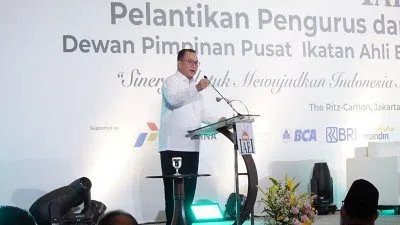
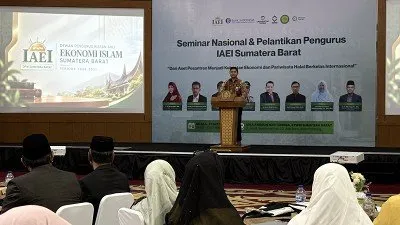
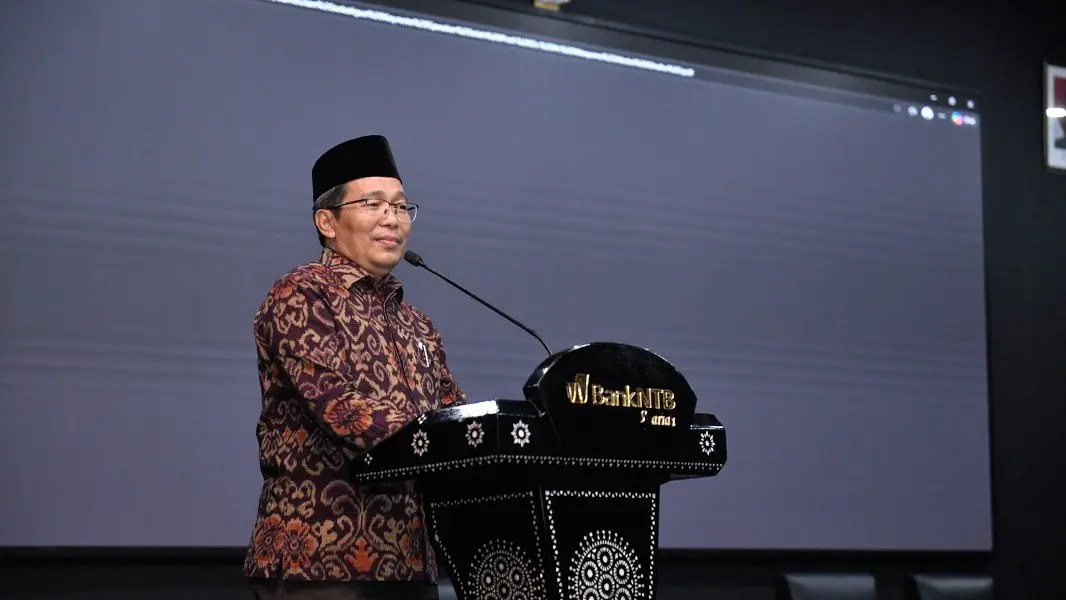
This was stated by the Chair of Division VII for Islamic Public Finance Development at the Central Executive Board of the Indonesian Association of Islamic Economists (IAEI), who is also the Director of Zakat and Waqf Empowerment at the Directorate General of Islamic Community Guidance of the Indonesian Ministry of Religious Affairs, Prof. Dr. H. Waryono Abdul Ghafur, during a National Seminar held in conjunction with the inauguration of the IAEI NTB Regional Executive Board and Branch Committees at the Raudhah Auditorium on the 6th floor of the PT Bank NTB Syariah Headquarters in Mataram on Wednesday (October 21, 2026).
In his presentation titled “Directions and Strategies for Strengthening the National Sharia Economic and Financial Ecosystem to Drive Regional Economic Growth,” Prof. Waryono highlighted the immense potential for developing NTB’s sharia economic ecosystem, which is supported by the MSME sector, agriculture, livestock, fisheries, trade, and tourism.
According to him, this potential requires the support of an integrated ecosystem to drive regional economic growth while improving community welfare. The development of the Sharia economy must not only be growth-oriented but also strengthen the capacity of business actors, expand market access, and create added value for the local economy.
One key area of focus is strengthening the halal industry. This effort requires support ranging from the supply of raw materials, production processes, and halal certification to product distribution and marketing.
Prof. Waryono also highlighted the potential of zakat, infaq, sadaqah, and waqf in expanding community economic empowerment. These Islamic social finance instruments can be directed to support productive activities, strengthen economic self-reliance, and improve community welfare.
In the context of NTB, the optimization of Islamic social funds requires support from good governance, targeted distribution, and sustainable empowerment programs. Thus, Islamic social funds not only help meet the basic needs of beneficiaries but also have the potential to support the development of the community’s economic capacity.
In closing, Prof. Waryono emphasized that “strengthening and developing the Islamic economy is not merely the responsibility of the leadership, but must be a shared commitment.” Therefore, synergy among the government, financial institutions, universities, Islamic boarding schools, professional organizations, and the business sector must continue to be strengthened. He expressed hope that the IAEI NTB leadership would be able to implement concrete programs that have a tangible impact on the community through the strengthening of the halal industry, the empowerment of MSMEs, the expansion of Sharia financing, and the optimization of productive zakat and waqf—all aimed at realizing an inclusive and sustainable Sharia economy in NTB.