
West Sumatra has great potential to develop Muslim-friendly tourism by integrating its rich culture, religious tourism, halal cuisine, and natural beauty into competitive tourism products. This development requires improvements in service quality, destination connectivity, and synergy between the government, business actors, financial institutions, and the community.
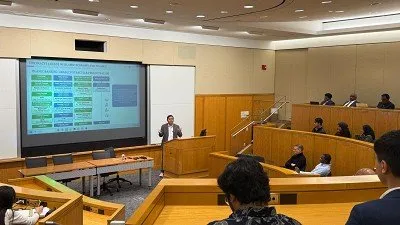
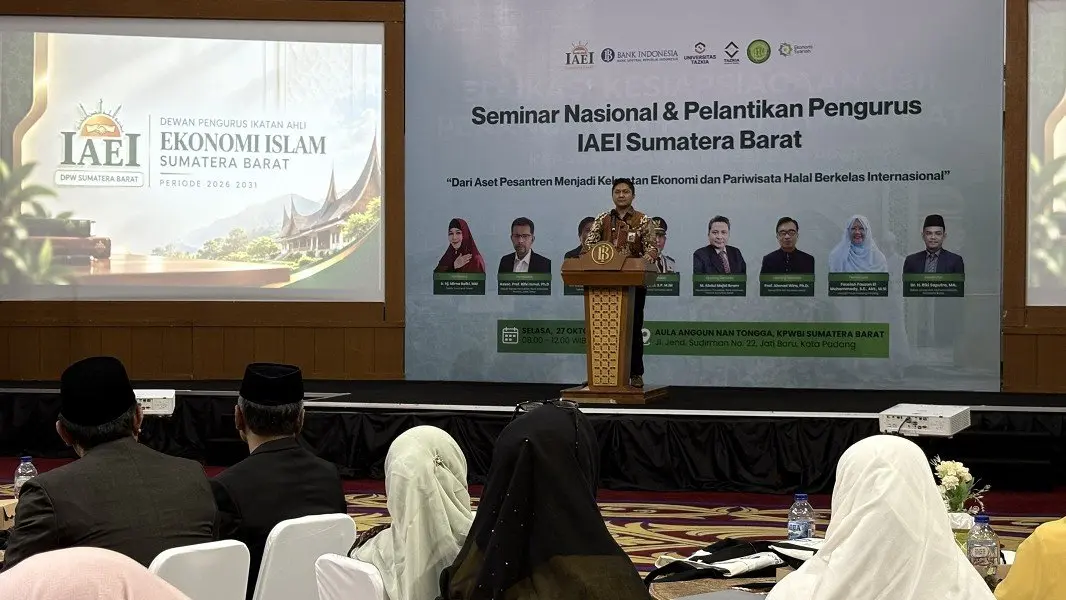
This was conveyed by the Secretary General of the Indonesian Association of Islamic Economists (IAEI), Dr. Sutan Emir Hidayat, in a presentation titled “Muslim-Friendly Tourism: Unlocking Regional Potential” at the National Seminar and Inauguration of the IAEI West Sumatra Executive Board on Tuesday (10/27).
In his presentation, Sutan Emir explained that Muslim-friendly tourism offers strategic opportunities to drive regional economic growth while expanding economic benefits for the community.
According to the presentation, Indonesia ranks second in the 2026 Global Muslim Travel Index (GMTI). Meanwhile, West Sumatra ranks fourth nationally in the 2025 Indonesia Muslim Travel Index (IMTI), with a score of 67.38 out of the 15 provinces evaluated.
These achievements serve as a foundation for West Sumatra to strengthen its position as a Muslim-friendly tourism destination. However, future development must focus on enhancing the quality of the tourist experience, not merely on promoting the destination’s potential.
Sutan Emir highlighted West Sumatra’s local resources that can be developed into Muslim-friendly tourism products. “West Sumatra possesses a wealth of culinary traditions, Islamic history, and indigenous culture that can be developed into Muslim-friendly tourism products. Signature dishes like rendang, mosques, and Islamic historical sites can be developed as educational tourism attractions, while the Rumah Gadang and traditional customs serve as community-based cultural experiences,” said Sutan Emir.
Islamic boarding schools (pesantren) can also play a role in the Muslim-friendly tourism ecosystem, including through educational programs on Islamic history and culture, the provision of halal products, and partnerships with travel agencies and destination managers. With the right division of roles, pesantren have the opportunity to develop productive economic activities linked to the tourism industry.
In this context, accessibility is a key aspect. The distribution of natural and cultural destinations across various regions of West Sumatra requires support in the form of transportation, route information, supporting facilities, and connectivity that makes it easier for tourists to move from one destination to another.
“The development of Muslim-friendly tourism in West Sumatra needs to be supported by better connectivity between destinations, equitable development of tourism areas, strengthened halal certification, and consistent cleanliness and service quality,” explained Sutan Emir.
Strengthening service standards can also be part of a strategy to boost tourist confidence. Sutan Emir highlighted Malaysia’s experience with the Muslim-Friendly Accommodation Recognition (MFAR) program, which provides a framework for recognizing businesses based on their compliance with Muslim-friendly service guidelines.
This standardization approach can serve as a reference for Indonesia in enhancing the industry’s readiness, provided it is adapted to the characteristics and needs of domestic businesses.
The development of Muslim-friendly tourism requires cross-sector coordination. The central and local governments play a role in policy, infrastructure, licensing, and promotion. Tourism industry players need to ensure the quality of accommodations, transportation, food, and supporting facilities. Meanwhile, MSMEs, Islamic boarding schools, cooperatives, and local communities can strengthen the provision of tourism products and experiences based on local potential.
Sutan Emir also emphasized the importance of digitalization and marketing to expand market reach. The development of Muslim-friendly tourism must be directed so that regional potential can be translated into curated, easily accessible tourism products that are ready to be marketed to both domestic and international tourists.
Through strengthened collaboration, West Sumatra has the opportunity to develop Muslim-friendly tourism that not only relies on cultural and natural assets but also features service standards, connectivity, and a business ecosystem that are internationally competitive.