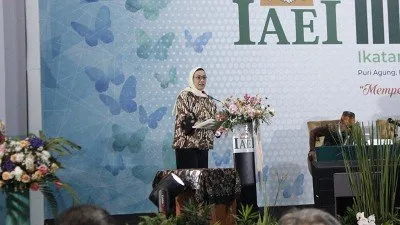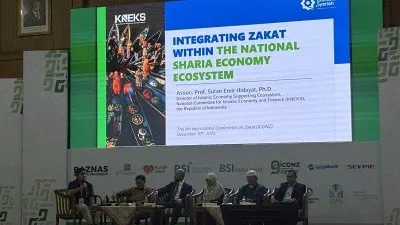

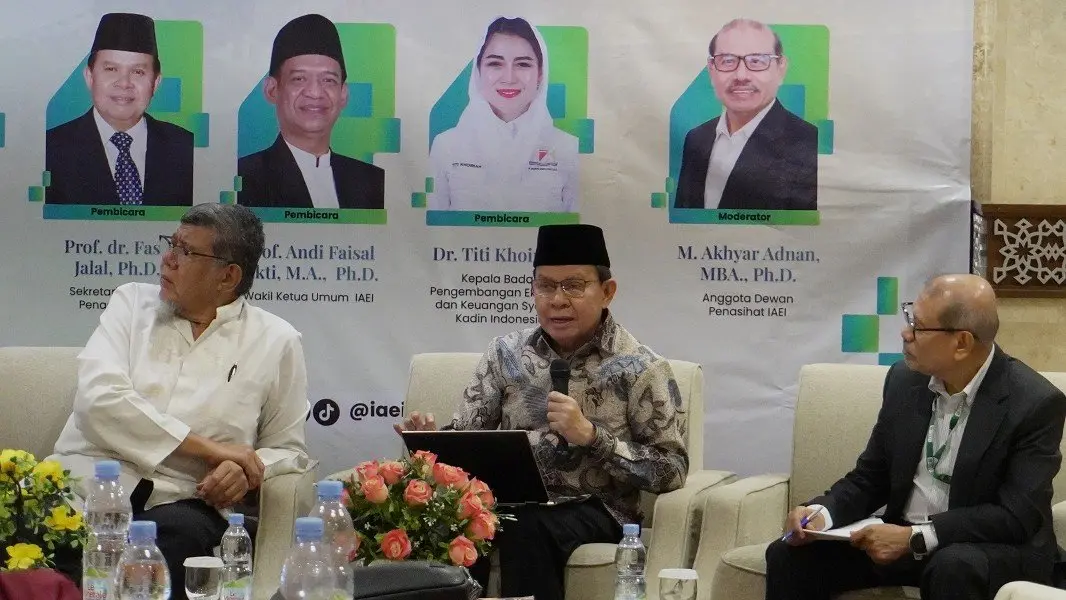
Indonesia's Islamic education ecosystem is considered to have immense potential to drive national economic resilience—not only through its role in human capital development but also through economic activities. This view was expressed by Prof. Fasli Jalal, Secretary of the Expert Council of the Indonesian Association of Islamic Economists (IAEI), during the IAEI Expert Council’s National Mudzakarah (deliberation) and discussion forum held at the VVIP Hall of Istiqlal Mosque, Jakarta, on Tuesday (September 29).
"The Islamic education ecosystem is a major asset we possess. However, we have yet to view or orchestrate it as an economic ecosystem, even though it encompasses consumption, employment, local spending, and production," said Prof. Fasli.
According to Prof. Fasli, this network comprises nearly 50,000 pesantren (Islamic boarding schools) with millions of students (santri), over 87,000 madrasah (Islamic schools) with more than 800,000 teachers and principals, and nearly 10 million learners. At the higher education level, there are over 1,300 Islamic higher education institutions with nearly 50,000 lecturers and approximately 1.3 million students. The ecosystem is further bolstered by around 138,000 majelis taklim (Islamic study groups), which enjoy public trust and serve as a form of social capital for the Muslim community.
This potential is also evident in the economic activities within the pesantren environment. A simulation presented showed that approximately 4.3 million santri—assuming monthly expenditures of IDR 750,000 to IDR 1.5 million—generate a potential spending volume of around IDR 34–68 trillion annually.
Furthermore, Prof. Fasli sees an opportunity for pesantren to serve as hubs within the halal value chain across various regions. This model could be developed through specialization based on the local potential of a specific pesantren or area, allowing products to be marketed to a broader consumer base. This model can be aligned with the requirements of national-scale programs—such as the Free Nutritious Meals (MBG) initiative—thereby creating opportunities for communities surrounding pesantren (Islamic boarding schools) to participate in the food supply chain.
To test the model, Prof. Fasli encouraged the IAEI to conduct a region-based pilot study by mapping the number and characteristics of pesantren, consumption needs, local production potential, supplier networks, financing requirements, and potential markets for the products.
“We do not need to create a national model right away. Start with a single region as a laboratory. Map out the needs, production, financing, and markets. If successful, the model can be replicated in other regions,” he concluded.