
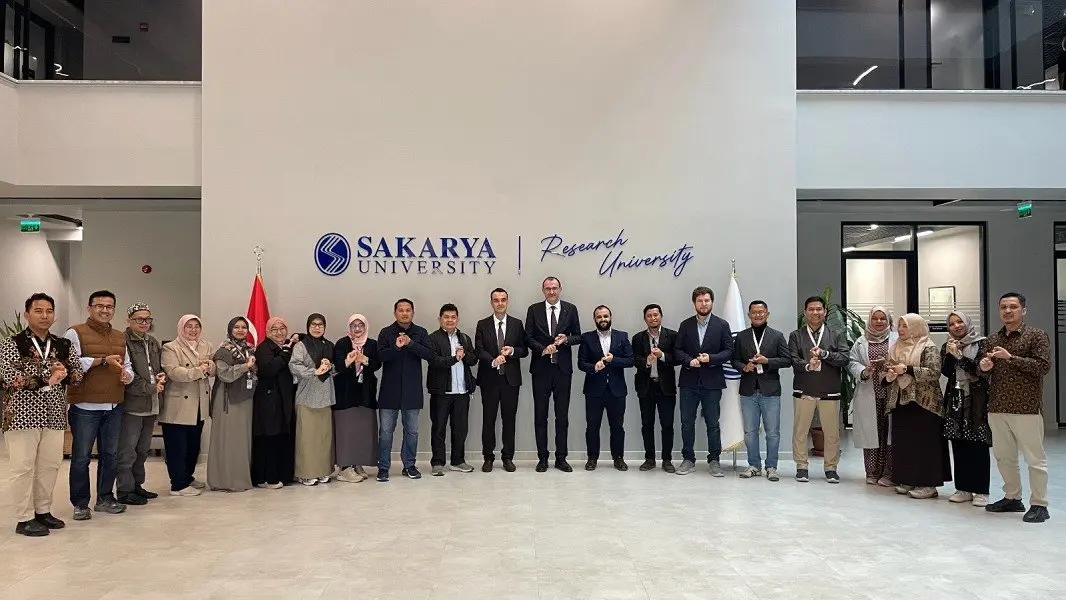
SAKİNAH TÜRKİYE 2026: Global Forum on Islamic Finance was held from October 26–28, 2026, in Sakarya, Türkiye, under the theme “Islamic Finance Integration for Global Crisis Resilience.” This international forum served as an academic platform to discuss the contributions of Islamic economics and finance in addressing global economic uncertainty, financial instability, environmental pressures, and social inequality.
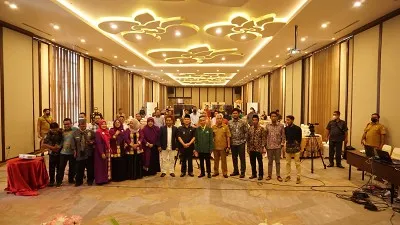
The event was organized by the Indonesian Association of Islamic Economists (IAEI) Türkiye, in collaboration with the Department of Islamic Economics and Finance and the Research Center for Islamic Economics and Finance (İSEFAM) at Sakarya University. The forum brought together academics, researchers, practitioners, policymakers, and students to exchange research findings, discuss policy perspectives, and expand cross-border academic cooperation.
The program was conducted in a hybrid format, featuring both online and in-person paper presentations, plenary sessions, a "Leaders Talk," and academic visits. According to the official handbook, the forum included 68 research papers—comprising 44 online and 24 in-person presentations. Participants hailed from six countries, with presenters representing eight different nationalities. The involvement of academics and institutions from various nations broadened the scope for knowledge exchange in the field of Islamic economics and finance.
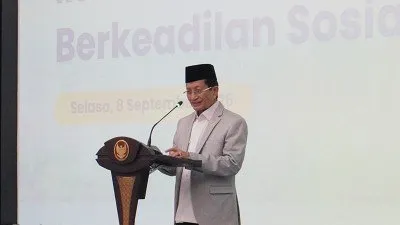
During the opening session on October 27, 2026, the General Chairman of IAEI, Prof. Dr. K.H. Nasaruddin Umar, M.A., delivered opening remarks. Sakarya University Vice-Rector Prof. Dr. Mehmet Emiroglu also delivered an address and officially inaugurated the forum. The presence of these two figures underscores the significance of the collaboration between Indonesia and Türkiye in advancing the study of Islamic economics and finance.
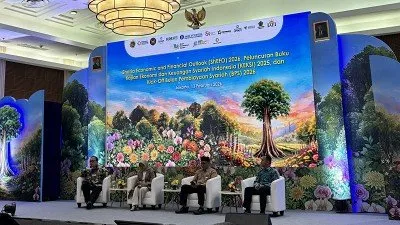
The plenary session addressed the forum’s core theme, featuring Prof. Mehmet Asutay, Director of the Durham Centre for Islamic Economics and Finance at Durham University (UK), and Prof. Dr. Shafiullah Jan, Program Director of the Centre for Excellence in Islamic Finance (CEIF) at the Institute of Management Sciences, Peshawar (Pakistan), participated in the event. The discussion was moderated by Assoc. Prof. Dr. Hakan Aslan, Director of the Research Center for Islamic Economics and Finance at Sakarya University.
In addition to the plenary sessions, the forum featured a "Leaders Talk" titled “Shaping the Future of Islamic Economics & Finance Curriculum: Bridging Academia, Industry, and Policy to Prepare Graduates for Global Crisis Resilience.” This session explored strengthening Islamic economics and finance curricula by fostering connections between academia, industry, and public policy. Speakers included Prof. Dr. Usman Ghani from the Institute of Management Sciences, Peshawar; Assoc. Prof. Ali Rama, S.E., M.Ec., Ph.D., from UIN Syarif Hidayatullah Jakarta; and Dr. Hüseyin Burgazoğlu from Sakarya University.
The academic program included 68 research papers covering ten thematic areas. Topics addressed included the resilience of Islamic banking, the stability of Sharia-compliant stocks, *takaful* (Islamic insurance) and risk mitigation, the integration of *zakat* and *waqf*, Islamic microfinance for MSMEs, green *sukuk* and sustainability, the recovery of the halal industry, the harmonization of global regulations, sustainable Islamic finance, and Sharia-compliant financial technology in the context of crisis recovery.
This scope demonstrates that discussions on Islamic finance extend beyond the operations of financial institutions to encompass social finance instruments, the development of the halal industry, technological innovation, and sustainability. Integrating these diverse fields is one of the approaches discussed to bolster economic resilience and promote more inclusive development.
The forum was supported by the Hajj Financial Management Agency of the Republic of Indonesia (BPKH RI) as a sponsor, alongside various partner institutions from Indonesia and Pakistan. This collaboration strengthens the international dimension of the forum and creates opportunities for developing research networks and institutional partnerships within the field of Islamic economics and finance.
The SAKİNAH TÜRKİYE 2026 program is scheduled to continue until October 28, 2026, with a field study in Istanbul. This will include visits to Bilim Vakfi, the Hagia Sophia, the Sultan Ahmed Mosque (Blue Mosque), and various other sites associated with the legacy of Islamic economics during the Ottoman era.
Dr. Aam Slamet Rusydiana, Chair of IAEI Türkiye, stated that the forum is expected to foster academic dialogue and international cooperation, aimed at developing an Islamic financial system that is resilient, inclusive, and sustainable. The exchange of research findings and policy perspectives is intended to serve as a foundation for further study and collaboration among academics, practitioners, and relevant institutions.