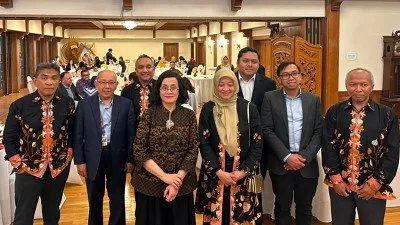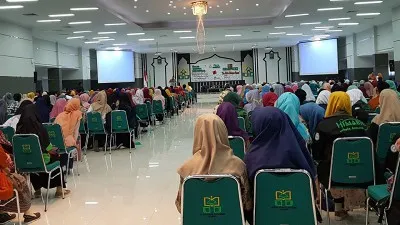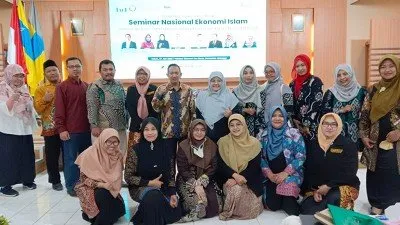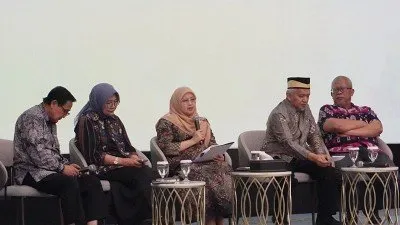

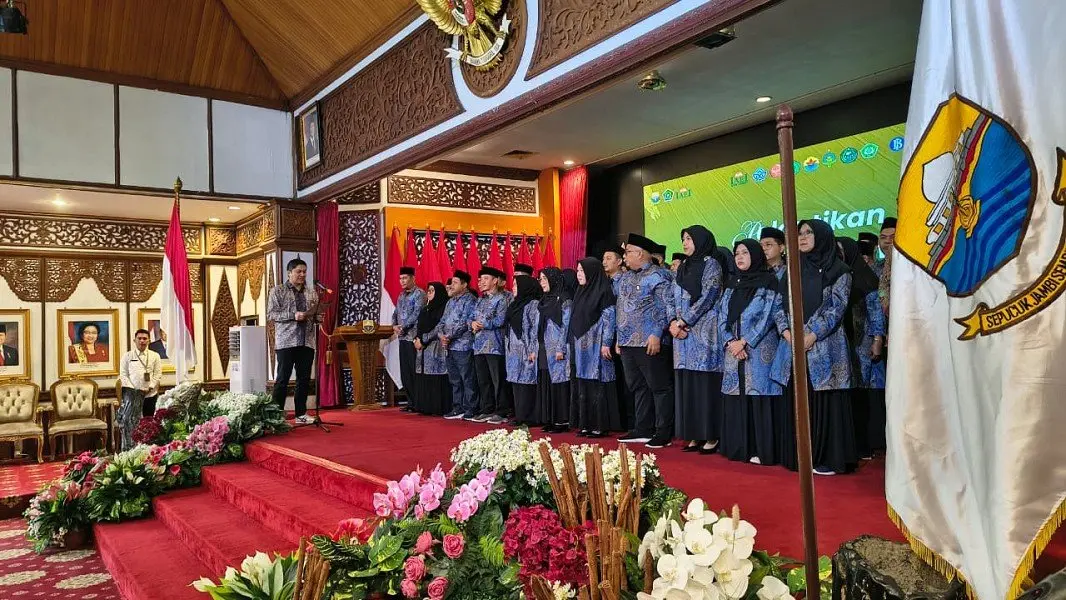
The Indonesian Association of Islamic Economists (IAEI) continues to strengthen the consolidation of Islamic economic development in various regions through the inauguration of the IAEI Regional Executive Board (DPW) of Jambi Province and the IAI Syekh Maulana Qori Bangko Branch, which was held in conjunction with a National Seminar on Islamic Economics themed “Innovation and Education in Islamic Economics in the Digital Age to Foster a Superior, Prosperous, Happy, and Stable Generation.” The event was held at the Jambi Governor’s Official Residence on Wednesday (June 3) and was attended by the Governor of Jambi, academics, practitioners, community leaders, and stakeholders in the Islamic economy of Jambi Province.
In his remarks, Dr. H. Al Haris, Governor of Jambi and Chairman of the Board of Trustees of the Jambi Provincial Chapter of IAEI, expressed appreciation for IAEI’s presence as a strategic partner of the local government in supporting inclusive, sustainable economic development based on the region’s unique potential. “Jambi possesses significant potential in the agriculture, plantation, SME, food industry, and creative economy sectors, which can be developed through an Islamic economic approach,” said the Governor.
Meanwhile, IAEI Secretary-General Dr. Sutan Emir Hidayat emphasized that Indonesia has a great opportunity to become a global hub for the Islamic economy. The demographic dividend and digital transformation must be leveraged to foster a young generation that is outstanding, innovative, and capable of driving the future of the Islamic economy.
Sutan Emir also highlighted the vast potential of the global halal market. Global Muslim consumption in the halal sector has reached approximately USD 2.43 trillion and is projected to continue rising in the coming years. This situation opens up significant opportunities for potential regions like Jambi to develop a halal value chain based on local strengths.
“Jambi possesses very strong assets. The potential of the plantation, agricultural, SME, Islamic boarding school, and higher education sectors can be integrated into a productive and competitive Islamic economic ecosystem. Therefore, IAEI Jambi must serve as a hub for collaboration, literacy, research, and innovation in the Islamic economy in the region,” added Sutan Emir.
On that occasion, Sutan Emir also conveyed a message from the IAEI Chairman, Prof. Nasaruddin Umar, who emphasized the importance of making IAEI a national platform for collaboration to strengthen the contribution of the Islamic economy to national development. The IAEI Chairman urged all regional executives to actively build synergies with the government, universities, industry, Islamic boarding schools, and community groups to expand the impact of the Islamic economy on the welfare of the people.
The inauguration marked the formation of the IAEI Jambi Regional Executive Board (DPW), led by Dr. Rafidah, Dean of the Faculty of Islamic Economics and Business (FEBI) at UIN Sulthan Thaha Saifuddin Jambi. The board features a strong and representative structure, incorporating academics, professionals, industry practitioners, regulators, and community leaders—all expected to serve as driving forces for the development of Islamic economics and finance in the region. The IAEI Jambi Regional Executive Board is expected to serve as a catalyst for the consolidation and acceleration of Islamic economic development at the regional level, while also strengthening Jambi’s role in supporting the national agenda for the development of the halal industry, Islamic finance, and the development of high-quality human resources toward Indonesia Emas 2045.